
Red Flags to Watch for During Redevelopment
 By Kabra Group
 Prerendered
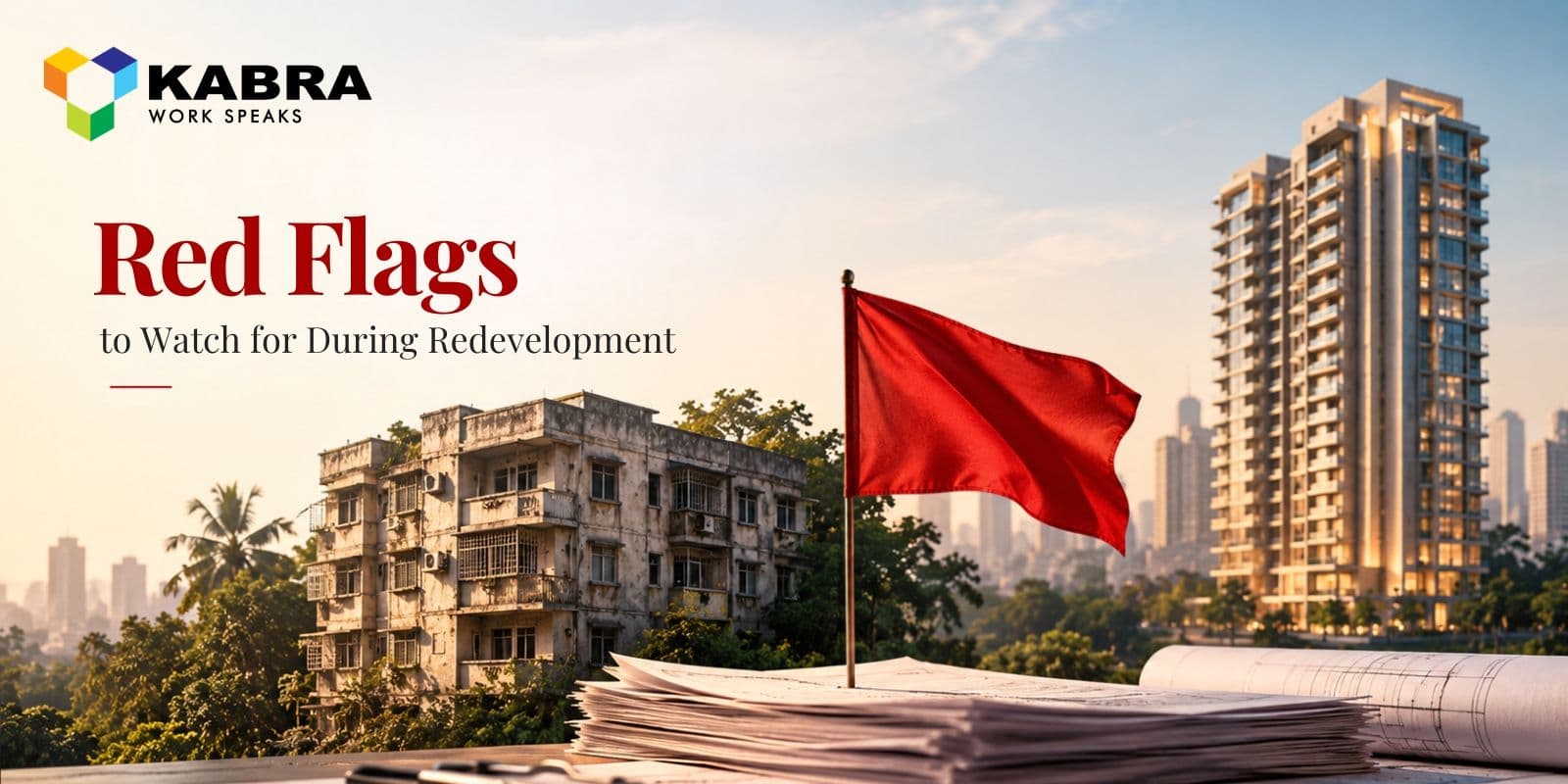
Redevelopment can transform an ageing housing society into a safer, more modern and better-planned community.
But it is also a long-term journey involving multiple stakeholders, financial commitments, legal documentation and years of planning.
That's why choosing the right redevelopment partner is about much more than accepting the most attractive offer.
Before taking the next step, here are some important red flags every housing society should watch for.
1. Promises That Sound Too Good to Be True
A larger home.
An unusually high corpus.
Extensive amenities.
Minimal timelines.
An offer can look extremely attractive on paper. But before making a decision, societies should ask an important question:
Can every promise actually be delivered?
It is important to look beyond the headline offer and evaluate the developer's track record, financial strength and ability to complete projects successfully.
The best offer is not always the biggest one.
It is the one that is realistic, transparent and backed by the capability to deliver.
2. Unclear Terms and Conditions
Redevelopment involves important commitments that should never be left open to interpretation.
Details related to timelines, temporary accommodation or rent, compensation, the specifications of the new home and other key responsibilities should be clearly documented.
If important answers remain vague or verbal assurances replace written commitments, it is time to pause and ask more questions.
If it matters, it should be clearly documented.
Before signing any agreement, societies should seek appropriate independent legal and professional advice.
3. No Clear Project Timeline
Redevelopment takes time. Delays can happen.
But that doesn't mean the timeline should be unclear from the beginning.
A credible redevelopment plan should provide clarity around key stages of the project, from approvals and transit arrangements to construction and possession.
Societies should understand:
What are the major project milestones?
What happens if there is a delay?
How will residents be kept informed?
What support is available during the redevelopment period?
A clear roadmap creates accountability.
A vague one creates uncertainty.
4. Limited Transparency
Communication becomes especially important once the redevelopment journey begins.
Residents should not feel disconnected from a decision that directly affects their homes and future.
A lack of clarity around approvals, timelines, project progress or changes should never be ignored.
The right redevelopment partner should have a structured approach to communication and keep the society informed at every important stage.
Because trust is not built only when the agreement is signed.
It is built throughout the journey.
5. A Weak or Unproven Track Record
Every developer has a story to tell.
But societies should look beyond presentations and promises.
Research completed projects. Understand their experience with redevelopment. Visit existing developments where possible. Speak to relevant stakeholders and assess how consistently the developer has delivered.
Past performance cannot predict every future outcome, but a strong and relevant track record can provide valuable insight.
Experience matters, especially when a project involves an entire community.
6. Pressure to Make a Quick Decision
Redevelopment is not a decision that should be rushed.
If residents are being pressured to make decisions without enough time to understand the proposal, review documents or seek professional advice, that should raise concerns.
A redevelopment project can shape the future of a society for decades.
Taking the time to ask questions, compare proposals and understand every important commitment is not a delay.
It's responsible decision-making.
7. Looking Only at the Numbers
Additional carpet area and financial benefits are important.
But redevelopment is about more than numbers.
The quality of construction, planning, amenities, safety, maintenance considerations, parking and the overall future of the community should all be part of the conversation.
A society isn't simply choosing a new building.
It is choosing the environment in which its residents will live for years to come.
The Right Questions Can Prevent the Wrong Decisions
A successful redevelopment journey begins long before construction starts.
It begins with due diligence.
By identifying potential red flags early, asking the right questions and evaluating a developer beyond the initial offer, housing societies can make more informed decisions.
At Kabra Group, redevelopment is viewed as a long-term partnership built on planning, communication and trust. With over 40 years of experience in Mumbai's real estate landscape, the focus has always been on creating homes and communities designed for the future.
If your society is exploring redevelopment, the first step is simple:
Ask questions. Review every detail. And choose a partner you can trust for the entire journey.